Use Cases / Institutes
One Badge Should Not Open Everything
Budapest
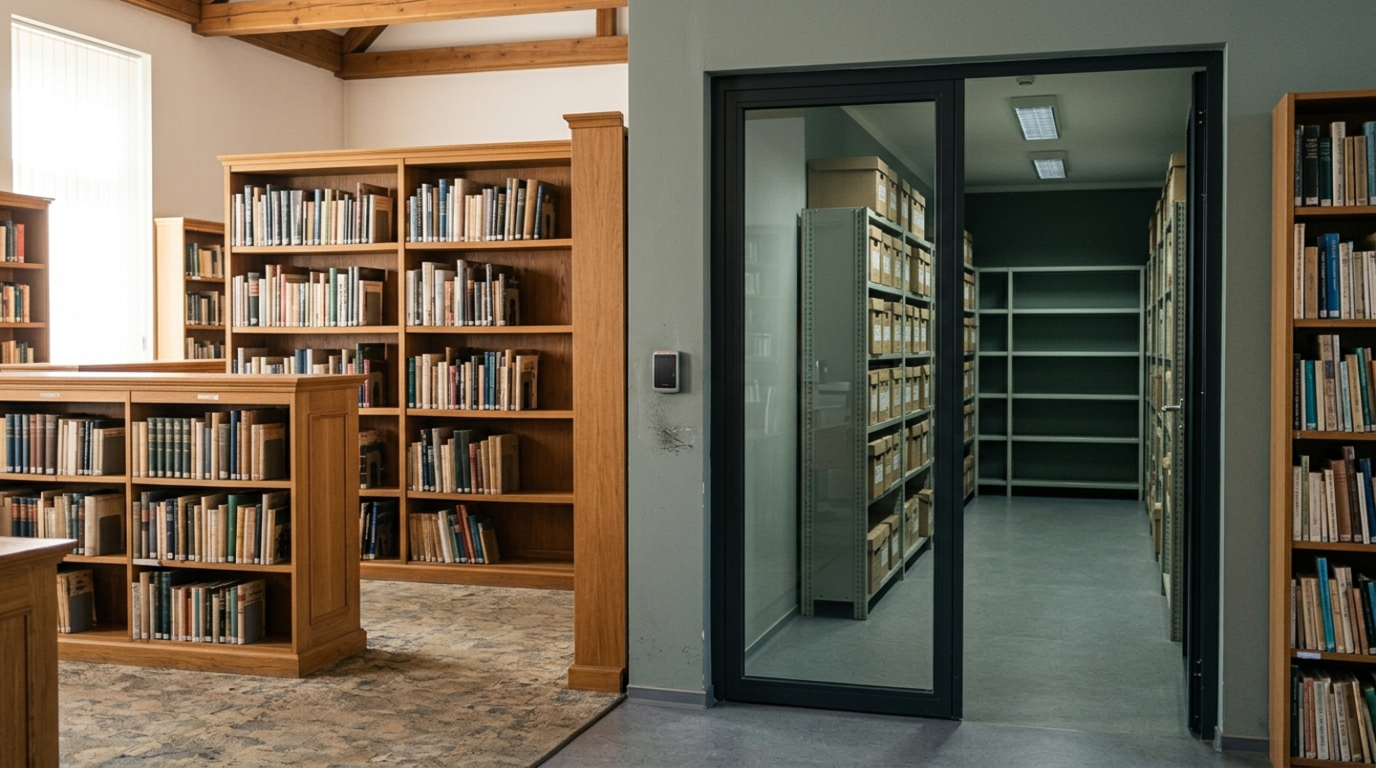
A public library director in Budapest wanted the building to stay exactly as open and welcoming during the day as it had always been, while still properly protecting a server room, a rare-books archive, and a set of staff-only back offices. The library's existing single-zone access system simply couldn't provide that balance.
The problem became concrete when a citizen filed a public-records request asking who had accessed the rare-books archive on a specific date the previous month. The library had no way to answer honestly, because the same staff badge that opened the front entrance opened the archive, the server room, and every internal door, with no distinction at all. There was no record separating "entered the building" from "entered the archive." The director, conscious of the transparency obligations public institutions are expected to meet, didn't want to solve this by locking down the whole building, which would undermine the library's entire purpose. She wanted a system that stayed genuinely open where it should be and genuinely restricted where it needed to be, with a clean answer ready the next time someone asked. She contacted AION Networks.
AION designed tiered access zones on a single platform. Public areas remained frictionless, with no badge requirement at all. Staff areas required a standard credential. The archive and server room required elevated authorization, with every entry automatically time-stamped and logged. Front-door traffic was entirely unaffected by the changes.
The next records request that arrived was answered in minutes with an exact, exportable access log, rather than an afternoon of staff trying to reconstruct who might have been where. AION maintains the tiered system today under an ongoing service agreement as the library's staff and hours continue to change.
Discuss your project