June 18, 2026
Ubiquiti's New Enterprise NAS Is Built on ZFS
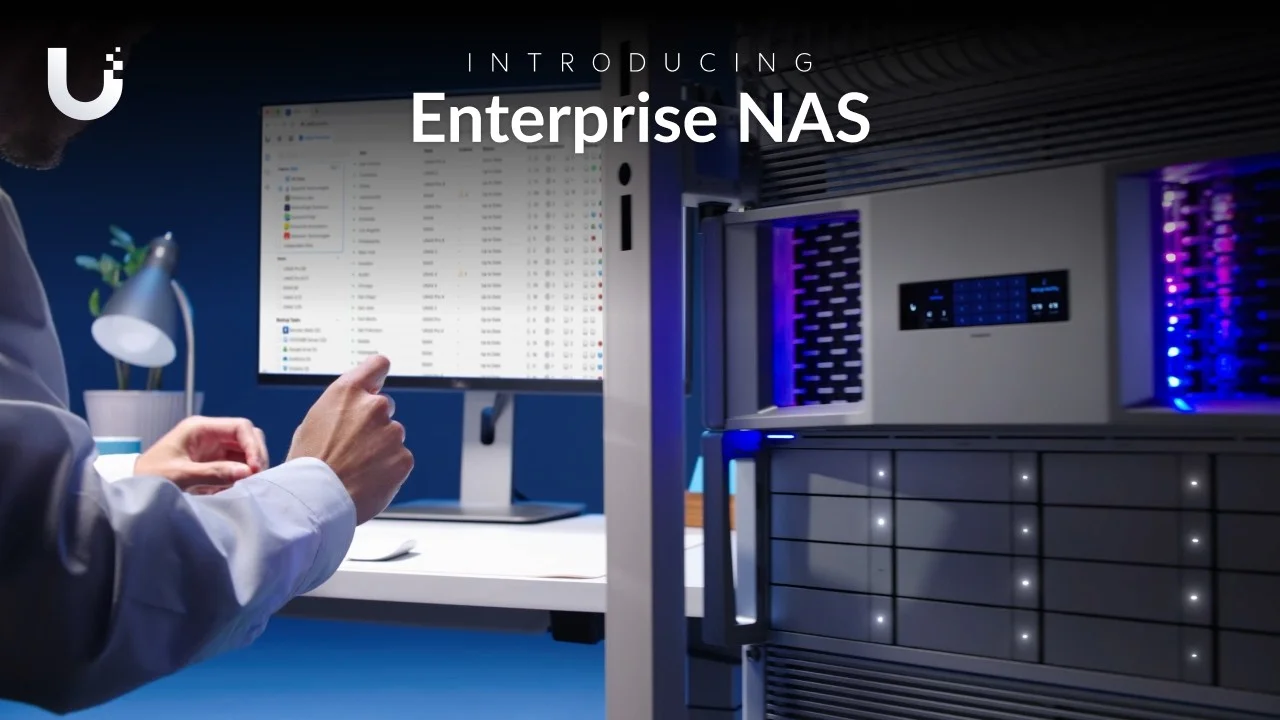
Ubiquiti's new Enterprise NAS, ENAS, brings serious ZFS-backed storage into the UniFi ecosystem. It's aimed at organizations that have outgrown consumer network storage but don't want the cost and complexity of a traditional enterprise SAN.
Real enterprise performance
ENAS pairs native ZFS with optional NVMe caching and an 8-core ARM Neoverse N2 platform with 64GB of ECC memory. That gives it genuine enterprise throughput, plus the end-to-end checksummed integrity that catches silent disk corruption other filesystems simply miss.
For clients using Protect for long-retention video, that integrity guarantee is not academic. Footage that has to survive months or years of storage stays verifiably intact, not just present on disk.
Scale that doesn't lock you in
ENAS is built to grow with the business:
- 16 drive bays, expandable past a petabyte of raw storage
- No firmware restrictions on which drives you use
- Dual 25 Gigabit SFP28 ports and redundant power supplies
Healthcare clinics and municipalities with extended video or records retention requirements get storage that can grow alongside their compliance obligations instead of forcing a hardware swap every few years.
Managed inside UniFi, no extra licenses
Management stays inside the platform clients already use, with no separate licensing fee. Access is role-based and ties into existing identity providers, with secure device access through UniFi Endpoint. For an office with several staff needing different levels of access to shared files or footage, permissions can actually map to how the organization is structured, instead of one flat all-or-nothing share.
Where it's heading
Two features point at what's next: centralized multi-site backup orchestration lets an ENAS back up to another ENAS, an rsync server, or the cloud in a few clicks, which is genuinely useful for a property group running several sites that all need protected backups. And native iSCSI shared block storage adds virtualization support, compatible with Proxmox, VMware, and Hyper-V, for organizations running their own compute infrastructure alongside the network.