2026. június 25.
Network 10.5 Tightens Up Multi-Site Management
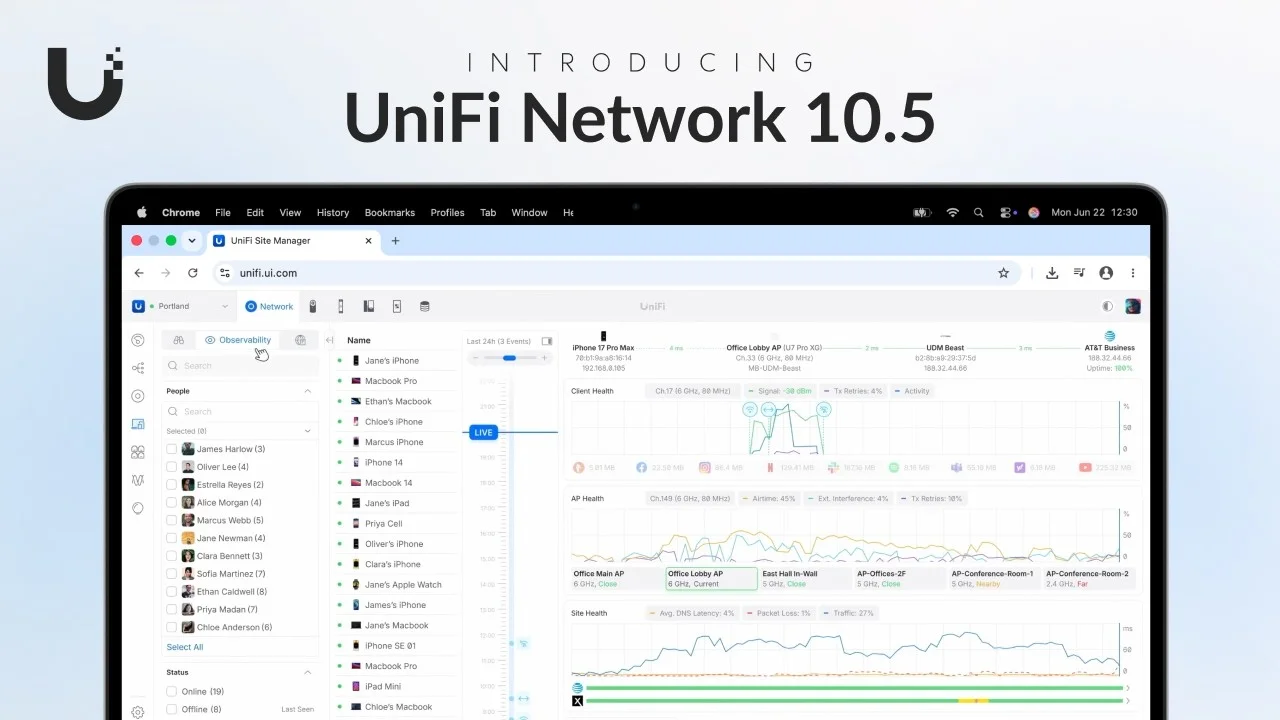
Network 10.5 is about operational confidence: making it safer to change a live network, faster to recover when something goes wrong, and easier to see what's actually happening on it. None of it needs a new license.
Changes that can undo themselves
The standout addition is Safe Operations. Configuration changes now go through a test-and-confirm step before they become permanent, with automatic rollback if connectivity drops mid-deployment.
For property managers making network changes at occupied buildings, that safety net matters. An adjustment can happen during business hours without risking an outage that locks staff or residents out.
A more stable network underneath
Two smaller changes improve topology stability:
- Link Debounce filters out temporary port flaps before they ripple through the network
- Auto STP Edge identifies access ports automatically and skips unnecessary topology recalculation
That kind of resilience matters most on larger, more complex sites: campuses, or a portfolio of condominium buildings, where one flaky link shouldn't cause a visible slowdown somewhere else.
Better WAN and campus connectivity
This release also brings real infrastructure improvements. Firewall rule hit statistics show what's actually being blocked. 1500 MTU support improves throughput on PPPoE connections. And license-free UniFi Building Bridges extend trunk connectivity across a campus without laying new fiber, a practical option for municipalities or property groups connecting several buildings on one site.
Troubleshooting from the client's point of view
Time Machine is a genuine shift in how troubleshooting works. Instead of digging through infrastructure logs, an administrator can replay a specific client's connectivity history and roaming behavior on one timeline. When a resident reports flaky WiFi, that means a fast, precise diagnosis instead of guesswork.
Identity that follows the organization
Site Manager's expanded SAML support lets an organization tie network access to its existing identity provider. For offices already using centralized identity management, staff network access now follows the same login policy as everything else they use.